

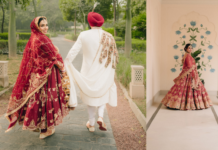


A Punjabi bridal look is not just about the outfit. It is about how every element comes together — from silhouette to jewellery, from fabric to finish.
In this Punjabi bridal styling guide, I break down how brides can move beyond trends and build a look that feels intentional, balanced, and deeply personal.
In an industry currently obsessed with “effortless luxury”, a phrase that has become as scripted as it is stagnant, how does a bride actually find herself? As a bridal stylist, I have seen a thousand beautiful outfits, but very few authentic identities.
To get your Punjabi bridal look right, you do not need a checklist or the most expensive label. It comes down to the architectural precision of your silhouette, the tactile depth of your fabrics, and the honesty of how you choose to present yourself.
If you are tired of the “bridal mask”, this is your guide to styling a look that actually belongs to you.
How to Choose the Right Silhouette for a Punjabi Bridal Look
The key to choosing a Punjabi bridal silhouette is ensuring ease of movement, balance, and proportion throughout the ceremony.
The Anand Karaj is rooted in grace and quiet movement. As a stylist, I always consider how an outfit behaves, not just how it looks. It must translate seamlessly from standing to sitting, from walking to stillness.
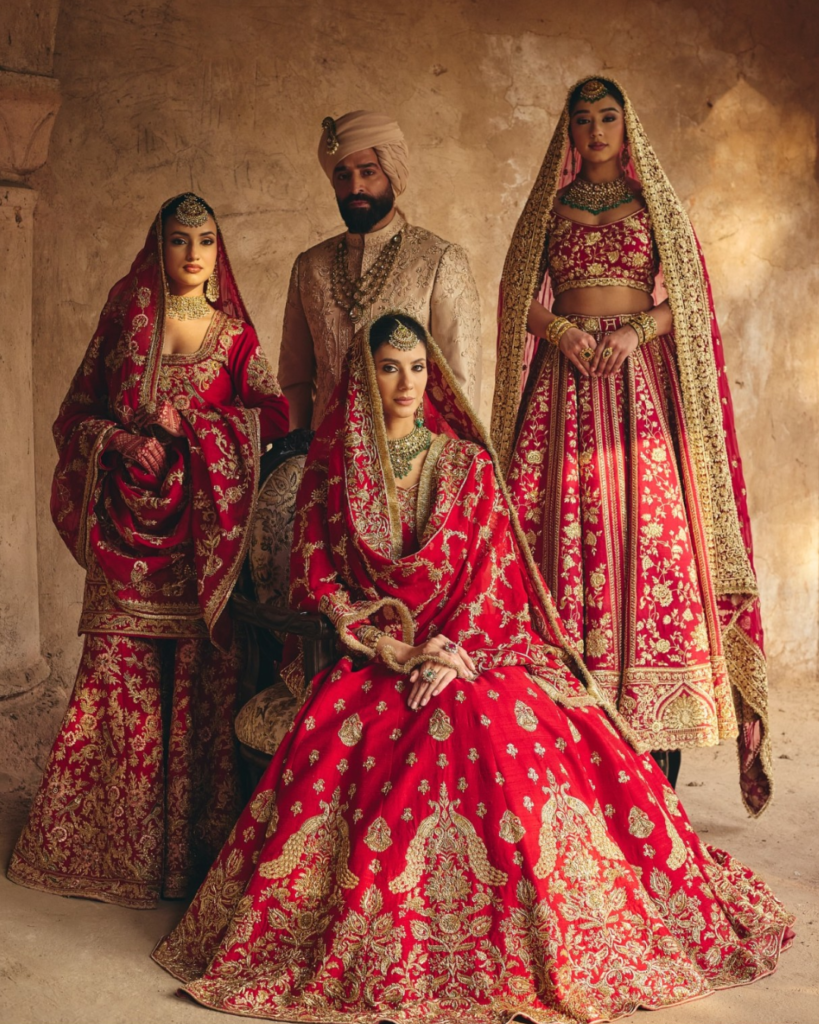
While the classic lehenga remains a staple, I am seeing a strong return of the sharara and the gharara. A sharara offers softness and fluidity that follows your movement. A gharara, structured at the knee, brings a sense of vintage drama that feels deeply connected to Punjabi heritage.
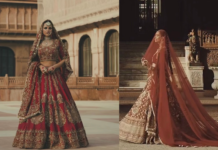
If you choose a lehenga, I often recommend a bias-cut. It removes unnecessary bulk at the waist and allows the fabric to fall in a more fluid, refined way. The result feels modern, but still rooted.
How to Use Fabric and Texture in Punjabi Bridal Styling
A flat outfit is a missed opportunity.
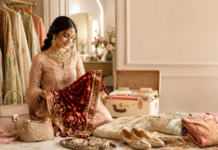
To create a look that feels editorial in photographs and grounded in person, you need depth. This comes from how fabrics interact with each other. I often pair opposing weights. A structured velvet blouse against a soft chiffon dupatta creates contrast that feels intentional rather than decorative. Texture also comes through craftsmanship. Instead of flat tilla work, I guide brides towards techniques that interact with light. Gota-patti, fine zardosi, or layered floral motifs create dimension. The garment begins to hold presence, even in stillness.
The goal is not to add more. It is to add meaning.
Bridal Makeup for Punjabi Brides: Achieving the Real Glow
Makeup should never feel like a mask.
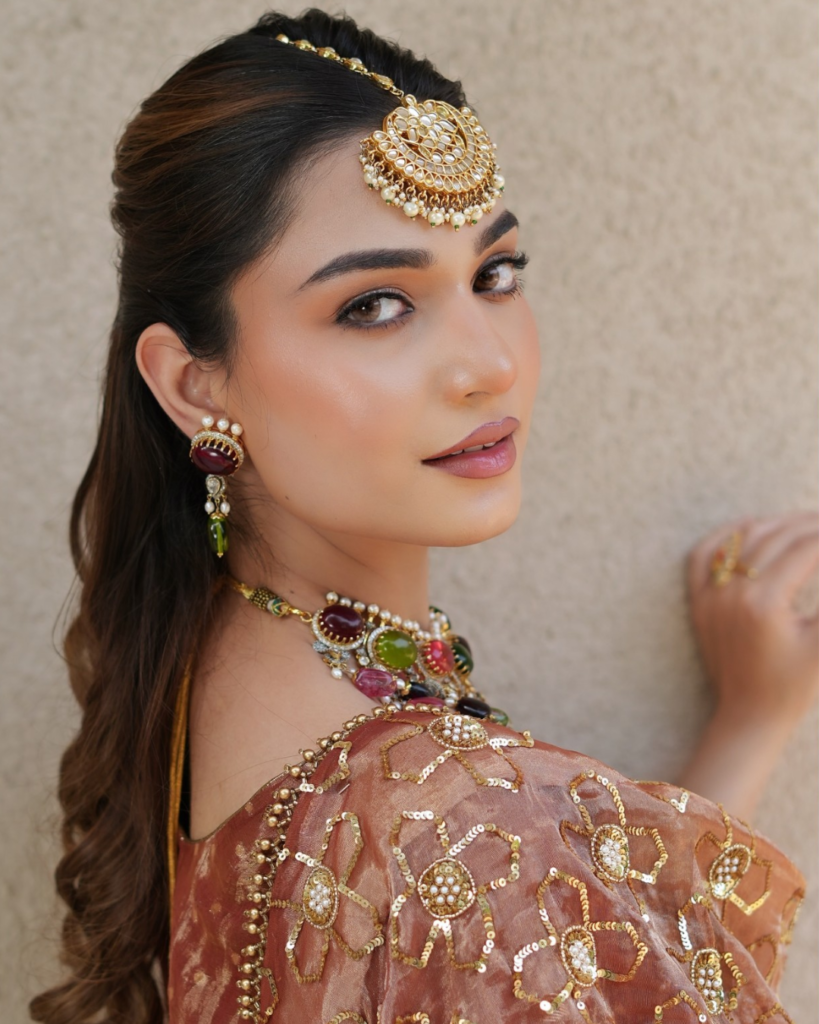
We are moving away from heavy contouring and overly constructed finishes. What works today is luminous, breathable skin that allows your natural texture to exist. When jewellery is heavy, the makeup should soften. A refined, soft-smoke eye or a controlled finish ensures your features and your jewellery do not compete with each other. You are not trying to look transformed. You are trying to look certain.
How to Style Jewellery for a Punjabi Bridal Look
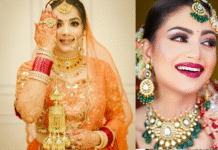
Jewellery is the emotional centre of a Punjabi bridal look, but its impact depends entirely on how it is styled.
The neckline of your blouse should guide every jewellery decision. A deep neckline creates space for a choker that follows the natural line of your collarbone. A higher neckline benefits from layering, where a shorter piece is paired with a longer rani haar to introduce length and movement.
Colour matters more than most brides realise. A heritage red lehenga naturally holds emerald tones beautifully. For pastel or cooler palettes, polki or softer stones maintain a sense of lightness.
One of the most overlooked details is the undertone of gold. Not all gold carries the same warmth. Your jewellery should belong to the same tonal family as your embroidery. When warm and cool golds are mixed unintentionally, the entire look begins to feel disconnected.
Beyond styling, I always encourage a personal detail. It could be a piece of inherited jewellery or something subtly customised into your look. These are the elements that make a bride feel like herself.
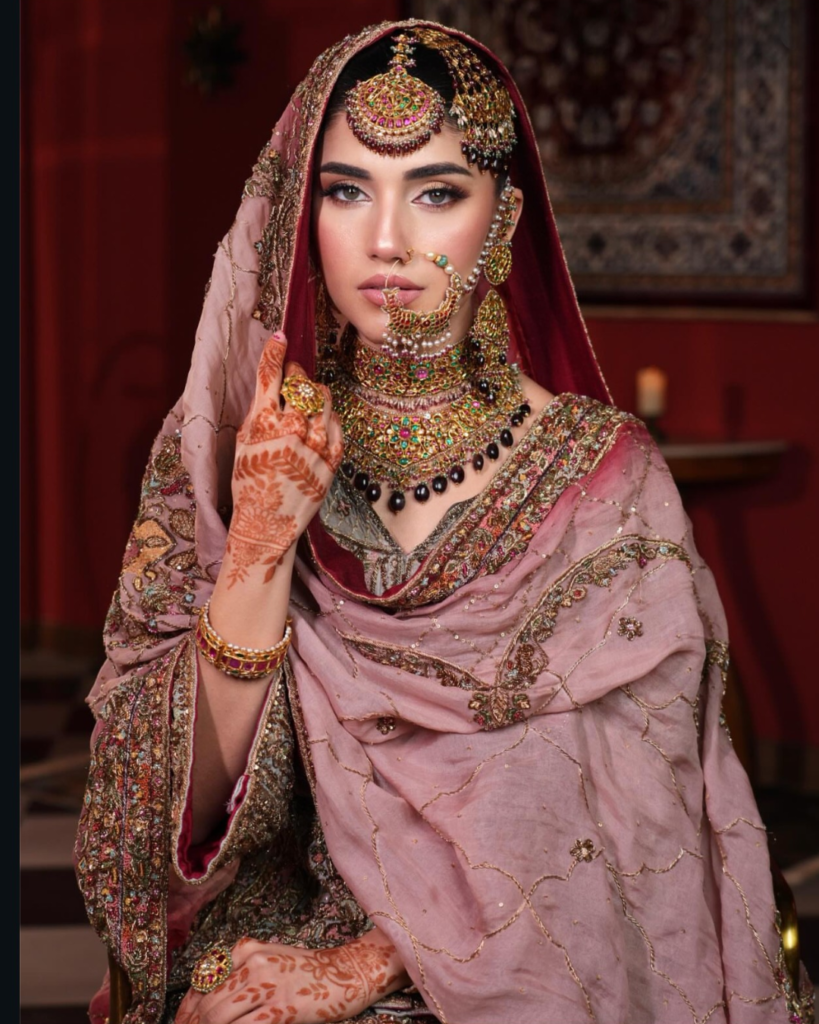
Image : Aren Jewellers Jaipurwale
How to Choose the Right Bridal Designer
Choosing a designer is not about visibility. It is about alignment.
Do not choose a label because it is trending. Choose someone whose design language reflects your own. If you are drawn to raw textures, heritage techniques, or quiet detailing, your designer should naturally create within that space.
When this alignment exists, the outfit does not overpower you. It supports you.
You remain the centre of your bridal look.
Common Punjabi Bridal Styling Mistakes to Avoid
Even the most beautiful elements can lose impact without balance.
Some of the most common Punjabi bridal styling mistakes include:
- Pairing heavily embroidered outfits with equally heavy jewellery
- Ignoring how the outfit behaves during the Anand Karaj
- Choosing trends that do not suit your comfort or body structure
- Mixing different gold undertones within the same look
- Overlooking dupatta placement, especially for photographs
Often, refining these details creates more impact than adding anything new.
Styling the Groom: Creating Visual Harmony
The groom is part of the visual narrative.
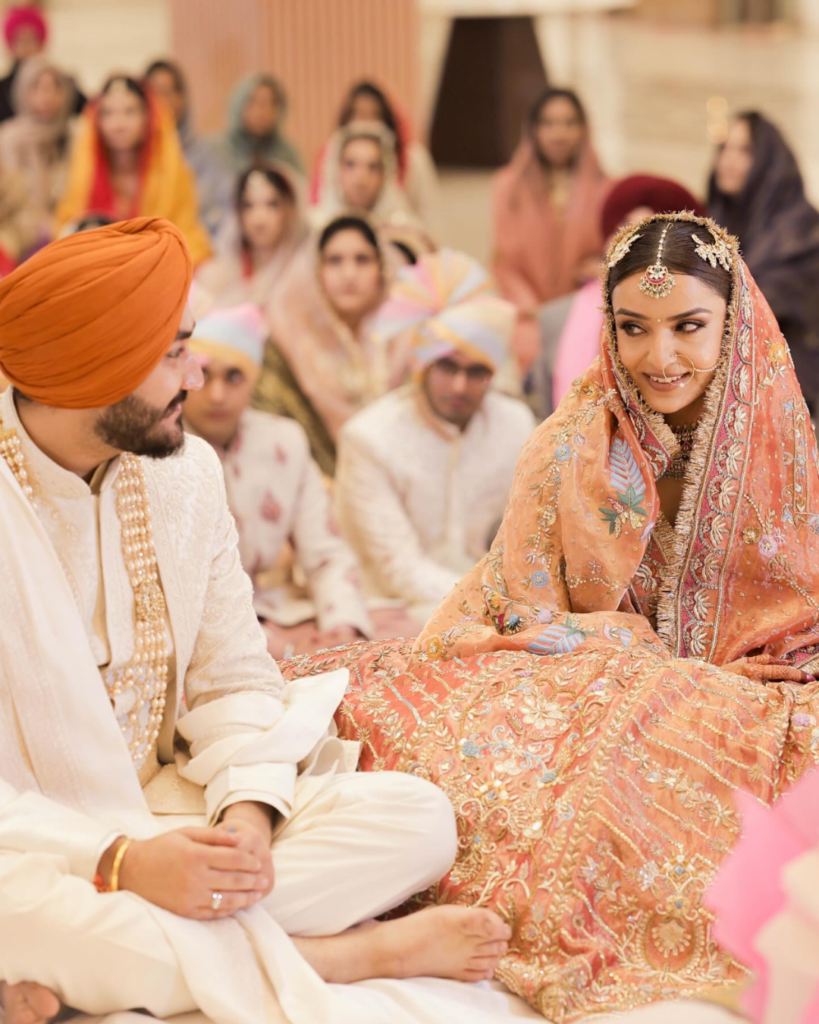
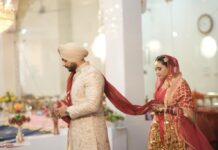
This is not about exact matching. It is about tonal harmony. If your outfit carries a certain warmth, his turban or accents should reflect that same tone. This creates cohesion without making the styling feel forced.
Quick Punjabi Bridal Styling Guide
For clarity, here are the essentials:
- Choose silhouettes that support movement and comfort
- Balance heavier fabrics with lighter elements
- Keep makeup aligned with the intensity of jewellery
- Match jewellery with neckline and outfit tones
- Focus on personal details rather than trends
Your bridal look is not just seen. It is remembered.
Do not aim for perfection. Aim for coherence.
When you find that balance between heritage and your own modern narrative, the pressure of trends begins to fade. What remains is something far more lasting.
Wear your story with conviction. Because the most beautiful thing you can wear is the confidence of knowing you are exactly who you intend to be.
About the Author
Diksha Saluja is a bridal stylist known for her thoughtful approach to Punjabi bridal fashion. Her work focuses on creating looks that feel balanced, personal, and rooted in cultural detail rather than trends.
For styling enquiries or to explore her work, connect with her on Instagram:
@thedikshasaluja
Frequently Asked Questions on Punjabi Bridal Styling
Which silhouette is best for a Punjabi bride?
Lehengas remain popular, but shararas and ghararas are strong alternatives depending on comfort and movement during the ceremony.
How should I choose jewellery for my bridal look?
Jewellery should match your neckline and outfit tones. Avoid mixing different gold undertones.
What is the biggest bridal styling mistake?
Overloading heavy elements together. A well-balanced look always feels more refined than an overly styled one.
What is the difference between a sharara and a gharara?
A sharara is a two-legged outfit that flares out from the waist, creating the appearance of a lehenga while offering more ease of movement. It feels lighter, more fluid, and is generally easier to carry through long wedding ceremonies.
A gharara, on the other hand, is fitted from the waist to the knee and then flares out sharply. This structured cut creates a more defined silhouette and is often associated with a traditional, regal aesthetic.
The choice depends on what you prioritise. Shararas offer comfort and flow, while ghararas bring drama and a stronger sense of heritage.