




Today’s grooms know fashion. They have references, they know their colours, they know what silhouettes work for them, and they are increasingly involved in putting their wedding look together. The result? Groom styling is no longer about simply finding a sherwani for the big day. It is about creating a look that feels personal, considered and, most importantly, like him.
And, thats what makes groom styling so much more interesting.
Because choosing a wedding outfit is actually all about finding that balance between who you already are and the version of yourself you want to see walking into your wedding. Maybe that means embracing the full Maharaja moment. Maybe it means keeping things understated and sharp. Or perhaps it is somewhere in between, rooted in tradition, but somewhat contemporary.
The beauty is that there is no one way to dress the groom anymore. And I love it!
Choosing the Right Silhouette
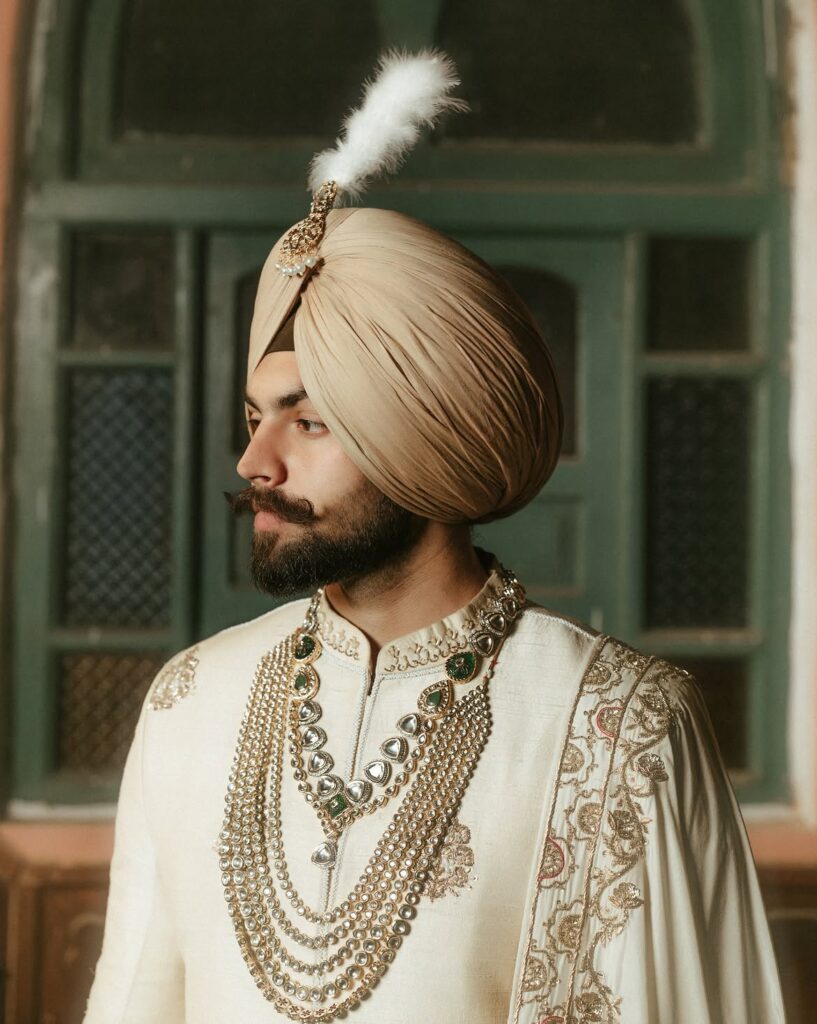
Before getting caught up in colours, embroidery and endless references, start with the silhouette.
The sherwani remains a classic for a reason. It carries the grandeur of a wedding beautifully and works especially well when you want a traditional, ceremonial look. But it is far from the only option. An achkan can give you a more structured and elongated silhouette, while a bandhgala can feel refined and contemporary while still being deeply Indian. Try some modern interpretations of the sherwani where you can play with length, layering, necklines and proportions to make the familiar feel new.
Think about how you want the outfit to make you feel. Do you want it to have a presence the moment you enter the room? Do you prefer something quieter and more sophisticated? Your silhouette should answer that before the embroidery does.
The setting can guide you too. A daytime wedding naturally lends itself to softer colours, lighter fabrics and restrained detailing, while an evening celebration gives you room to explore deeper shades, richer textures and more dramatic embellishment.
The Modern Punjabi Groom
There is a certain magnificence to a Punjabi groom. It is there in the safa, the kalgi, the jutti, the jewellery and the richness of the textiles, but more than anything, it is in the attitude.
There is no harm in embracing a little grandeur on your wedding day.
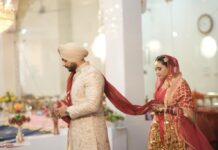
But Punjabi style does not have to mean putting every traditional element into one outfit. The modern Punjabi groom can borrow from the past without looking like he belongs to another era. A traditional safa can sit beautifully with a clean-cut sherwani. A classic jutti can ground a contemporary silhouette. A hint of phulkari-inspired colour or pattern can bring in heritage without making the outfit feel literal.
The beauty lies in interpretation. You are not recreating your grandfather’s wedding outfit. You are taking a piece of that visual language and making it your own.
Matching Without Matching
And then, of course, there is the bride.
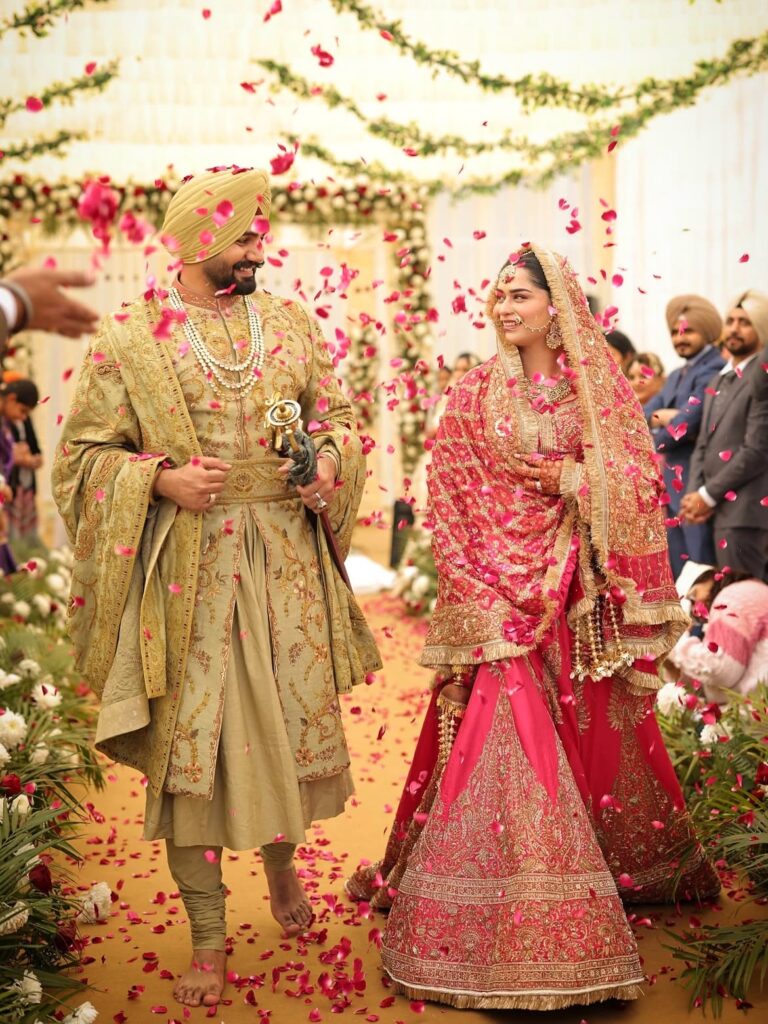
Once you know what the groom is wearing, the next question is how the two outfits are going to come together. And this is honestly one of my favourite parts of styling a couple.
Because I don’t think the bride and groom need to match. In fact, I love it when they don’t.
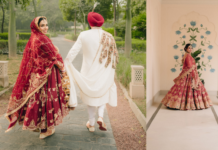
Maybe the bride has a little bit of green in her lehenga and the groom picks it up in his safa. Maybe there is a similar embroidery detail, the same kind of texture, or even just a shared colour somewhere in the two looks. It could be something so subtle that you don’t notice it immediately, but when you see them together, somehow everything just makes sense.
That, to me, is the difference between matching and coordinating.
You don’t want them to look like they went shopping for the same outfit in two different sizes. You want the two looks to have their own personality, but still feel like they belong to the same wedding, the same story.
Sometimes, all it takes is one little detail to bring the two looks together.
Because at the end of the day, the bride should still look like herself and the groom should still look like himself. Just a little more in sync.
Read Punjabi Bridal Styling Guide: A Stylist’s Approach to Getting Your Bridal Look Right
The Importance of Fit
No amount of embroidery alterations can rescue an outfit that does not fit properly.
This is especially important with Indian menswear because structured garments can completely change the way the body looks and moves. The shoulders should sit correctly, sleeves should fall at the right point, the length of the sherwani or achkan should work with your proportions, and the trousers should complement rather than interrupt the overall silhouette.
And there is plenty to choose from when it comes to Punjabi designers today. Labels like Panjab Bespoke, Simran Dhillon, Sudaadi and Armadio each approach menswear differently, but whether you are going for something traditional, contemporary or somewhere in between, the fit should always be the starting point. Get that right, and you’re guaranteed to look like a modern-day Maharaja. It’s also why alterations deserve far more attention than they usually get. Make sure your final fitting is not happening two days before the wedding.
The same principle applies to the finishing details. A safa, kalgi, stole, brooch, watch, ring or pair of juttis should have a reason for being there. You do not need to wear every accessory though. A few well-chosen details can say much more than an overloaded look.
Make It Personal
There is a temptation, especially around weddings, to choose something that feels bigger, grander and more elaborate than anything you would normally wear.
And sometimes, that is exactly what you should do.
But fashion is most convincing when you feel comfortable inside it. If your wardrobe has always been minimal and tailored, you may not suddenly feel like yourself in a heavily embellished sherwani. If you love colour, there is no reason your wedding day has to be the day you become afraid of it.
Your wedding outfit can be an elevated version of your personal style rather than a complete departure from it.
Trends will come and go. Your wedding photographs will not.
Styling for the Camera
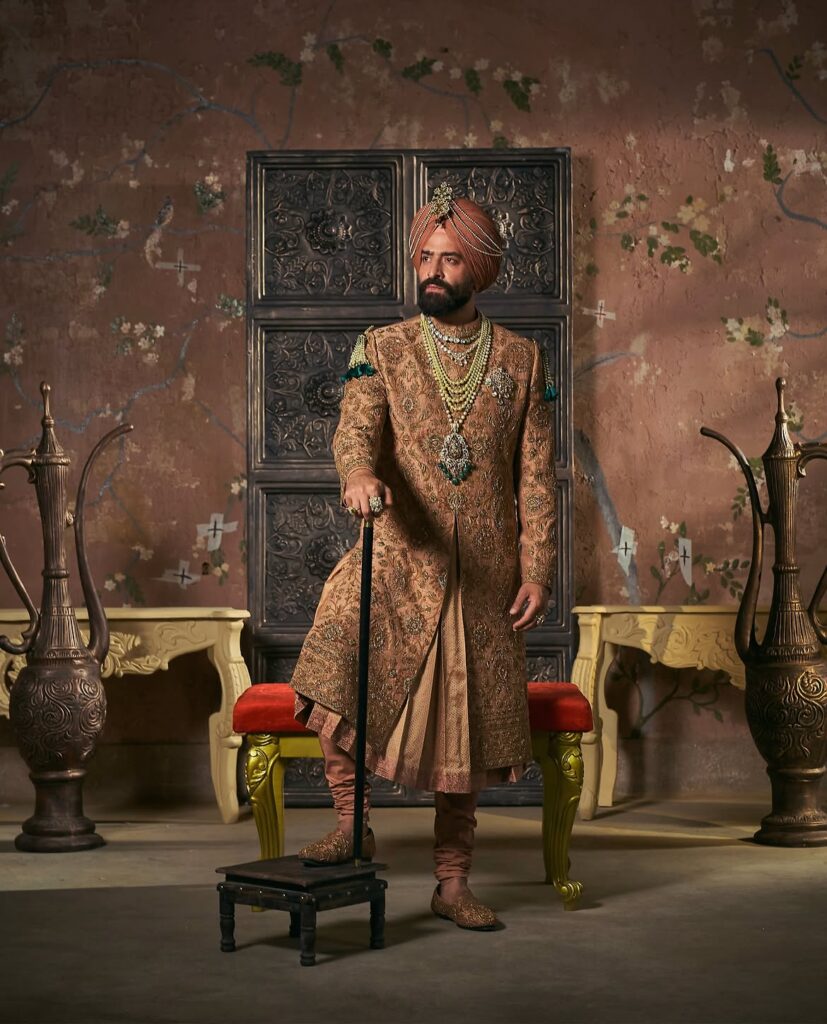
And yes, think about the photographs too. You are going to be in this outfit for hours, walking, sitting, dancing, greeting people and posing for what will probably feel like a thousand photographs. So make sure the outfit works beyond the mirror. Check the fit from different angles, see how the embroidery catches the light, and make sure your safa and accessories are sitting exactly where they should.
And if there is one thing I would tell every groom before he finalises his wedding outfit, it is this: don’t try to do too much.
You don’t need the biggest sherwani, ten accessories and the exact same colour as your bride to look like a well-styled couple. Pick the things you genuinely love, get the fit right, pay attention to the details and then leave the rest alone.
And please, do the final fitting days before the wedding week. Trust me on this one. Your bride is going to be stressed enough, so you better stay sorted on your own.
About the Author
Diksha Saluja is a bridal stylist known for her thoughtful approach to Punjabi bridal fashion. Her work focuses on creating looks that feel balanced, personal, and rooted in cultural detail rather than trends.
For styling enquiries or to explore her work, connect with her on Instagram:
@thedikshasaluja
Frequently Asked Questions
When should a groom start shopping for his wedding outfit?
Ideally, give yourself a few months rather than leaving it for the last minute. A wedding outfit usually involves fabric selection, design decisions, measurements, tailoring and multiple fittings. Starting early also gives you enough time to change your mind once or twice, which, honestly, is quite normal.
How do I know which wedding outfit will suit me?
Start with the kind of clothes you already feel comfortable wearing. Your height, build, personal style and the kind of wedding you are having can all help narrow down the options. It is also worth trying different silhouettes before deciding, sometimes the outfit you thought you wanted is not the one that actually works best on you.
Should I go for a traditional sherwani or something more contemporary?
There is no right answer here. If a classic sherwani feels right for you, go for it. If you prefer a cleaner achkan, a bandhgala or a more contemporary take on Indian menswear, that works just as well. Your wedding outfit does not have to look traditional simply because it is a wedding.
How do I choose the colour of my wedding outfit?
Think beyond what is trending. Your venue, the time of day, the season and even your bride’s outfit can help narrow it down. Day weddings can work beautifully with softer and lighter shades, while evening celebrations give you more freedom to experiment with deeper or richer colours. Most importantly, choose a colour you are actually comfortable wearing.
Should I get my wedding outfit customised or buy it off the rack?
For a wedding outfit, I would always recommend getting it properly tailored to you, especially when you are investing in a sherwani, achkan or bandhgala. A customised or made-to-measure outfit gives you much more control over the fit, proportions and small details, and those are often what make the finished look work.